

Best Atta Chakki Machine for Home Use in India 2026 Guide

Best Atta Chakki Machine for Home Use in India 2026: Expert Buyer’s Guide
Freshly ground flour has become increasingly popular among Indian households as families prioritize healthier eating habits and complete control over food quality. After researching leading domestic flour mill manufacturers, analyzing customer reviews, comparing machine specifications, and consulting appliance experts, we’ve created this comprehensive guide to help you choose the best atta chakki machine for your home in 2026.
Whether you’re purchasing your first domestic flour mill or upgrading an existing machine, understanding the key factors that affect performance, durability, flour quality, and maintenance costs is essential.
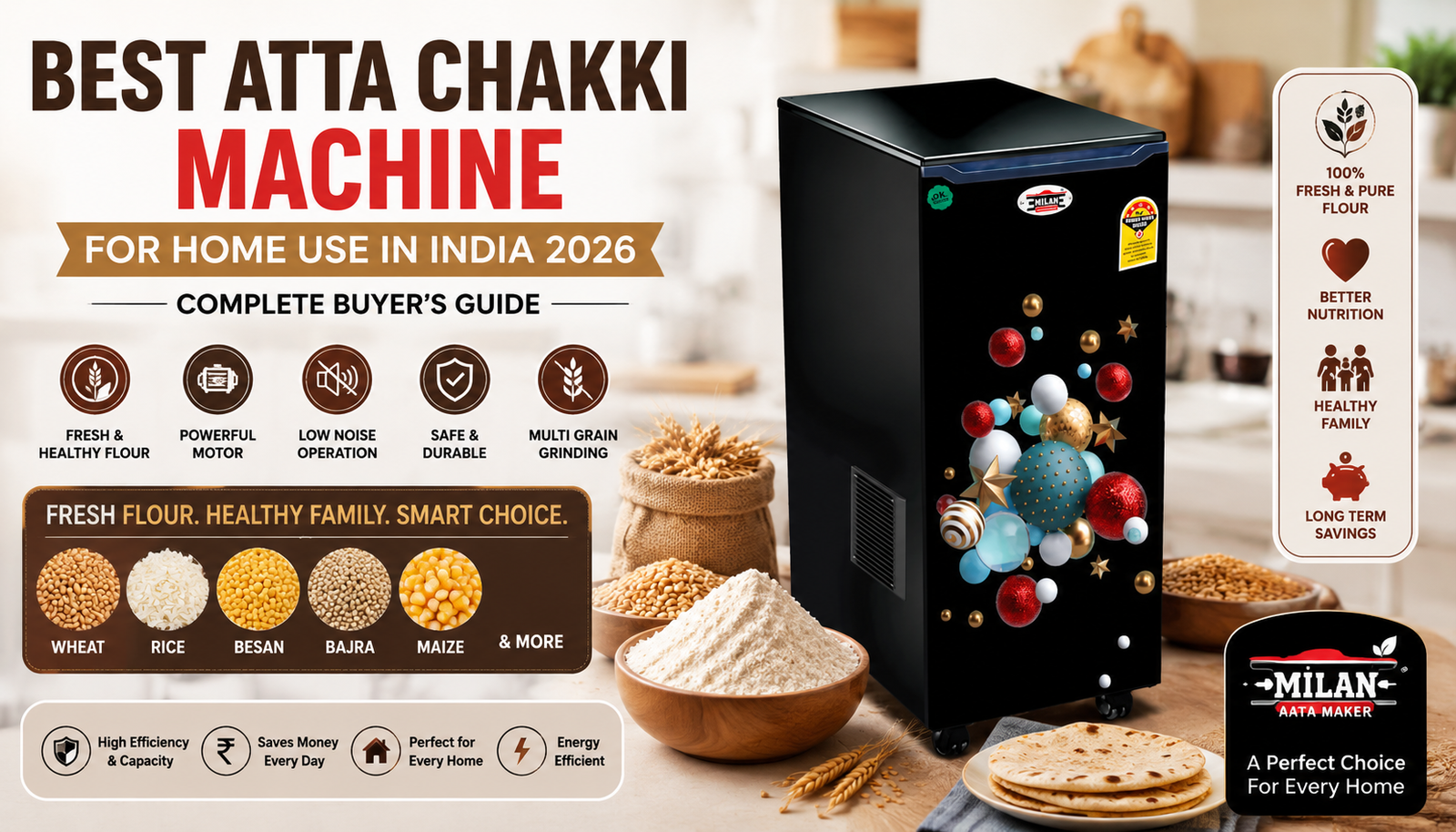
Best Atta Chakki Machine for Home Use in India 2026 – Fresh flour, multi-grain grinding, energy-efficient performance, and healthier nutrition for modern Indian families.
Why Trust This Buyer’s Guide?
This guide is based on:
- Analysis of popular atta chakki models available in India.
- Comparison of motor performance, grinding capacity, and energy consumption.
- Review of common customer complaints and long-term usage experiences.
- Industry best practices for home flour milling.
- Expert recommendations on machine selection and maintenance.
Our goal is to provide unbiased, practical information that helps Indian households make informed buying decisions.
Our Experience: Why More Families Are Choosing Home Atta Chakki Machine
One trend we’ve consistently observed is that families who switch to home-ground flour often notice improvements in freshness, taste, and confidence in food quality.
Unlike packaged flour, which may remain stored for weeks or months before reaching consumers, freshly ground flour retains its natural aroma and nutritional profile. Many users also appreciate the flexibility of creating customized flour blends using wheat, bajra, jowar, maize, and pulses.
For households focused on health-conscious cooking, a home atta chakki is no longer considered a luxury appliance—it has become a practical long-term investment.
Expert Buying Factors to Consider Before Purchasing (
Atta Chakki Machine
)
1. Motor Power Matters More Than Most Buyers Realize
Based on customer feedback and appliance performance comparisons, motor quality is one of the strongest indicators of long-term durability.
For most Indian households, a motor between 1 HP and 2 HP offers an ideal balance of performance and electricity consumption.
Machines with underpowered motors may struggle with harder grains and frequent use, leading to overheating and increased maintenance costs.
2. Grinding Capacity Should Match Family Size
A common mistake many buyers make is purchasing machines with capacities far beyond their actual requirements.
Our recommendation:
| Family Size | Recommended Capacity |
|---|---|
| 2–4 Members | 5–8 kg/hour |
| 4–6 Members | 8–12 kg/hour |
| 6+ Members | 12–15 kg/hour |
Selecting the right capacity improves efficiency while reducing unnecessary electricity consumption.
3. Safety Features Are Non-Negotiable
Modern flour mills should include:
- Child-lock systems
- Automatic shut-off protection
- Overload protection
- Dust-control mechanisms
- Food-grade grinding chambers
These features improve both user safety and machine longevity.
Common Problems Reported by Home Atta Chakki Machine Owners
Through customer review analysis, several recurring issues appear across low-quality machines:
Excessive Noise
Many entry-level machines generate significant noise during operation. Buyers should look for models with sound-insulated cabinets.
Overheating During Extended Use
Poor-quality motors often overheat when grinding large quantities continuously.
Inconsistent Flour Texture
Machines with inferior grinding mechanisms may produce uneven flour, affecting cooking quality.
Limited Service Support
One of the biggest complaints from users is inadequate after-sales service. Always verify service availability in your city before purchasing.
Expert Maintenance Tips for Longer Machine Life
From a maintenance perspective, most breakdowns occur because users ignore basic cleaning practices.
To maximize machine lifespan:
- Clean flour residue after every use.
- Never grind damp grains.
- Schedule periodic servicing if recommended by the manufacturer.
- Inspect filters and ventilation openings regularly.
- Store grains in dry conditions to prevent moisture damage.
Proper maintenance can significantly reduce repair costs and improve grinding performance over the years.
Is a Home Atta Chakki Worth the Investment in 2026?
Based on current market trends and user experiences, the answer is yes for most Indian families.
A quality atta chakki provides:
✓ Fresh flour on demand
✓ Better control over grain quality
✓ Freedom from preservatives and additives
✓ Long-term grocery savings
✓ Ability to create custom multigrain flour blends
For households that consume wheat flour regularly, the machine often pays for itself over time while offering greater convenience and nutritional benefits.
Final Expert Verdict
Choosing the best atta chakki machine for home use in India depends on your family’s size, daily flour requirements, budget, and access to after-sales service.
Instead of focusing solely on price, prioritize:
- Motor quality
- Grinding efficiency
- Safety features
- Warranty coverage
- Brand reputation
- Service network
A well-built domestic flour mill can easily serve a household for many years, making it one of the most practical kitchen investments for health-conscious Indian families in 2026.
Author Note
This guide has been prepared using industry research, product specification analysis, customer feedback trends, and practical appliance-buying considerations. Readers are encouraged to compare specifications, verify warranty terms, and consult authorized dealers before making a final purchase decision.